

Monday, 30 March 2026
SYSTEM STATUS: WIRELESS SIGNAL OPTIMIZATION
CATEGORY: MANUFACTURING / ACCESS CONTROL
LOCATION: USA PRODUCTION FACILITY
BRAND: DIGI-CODE
01. BATTERY VOLTAGE DEGRADATION
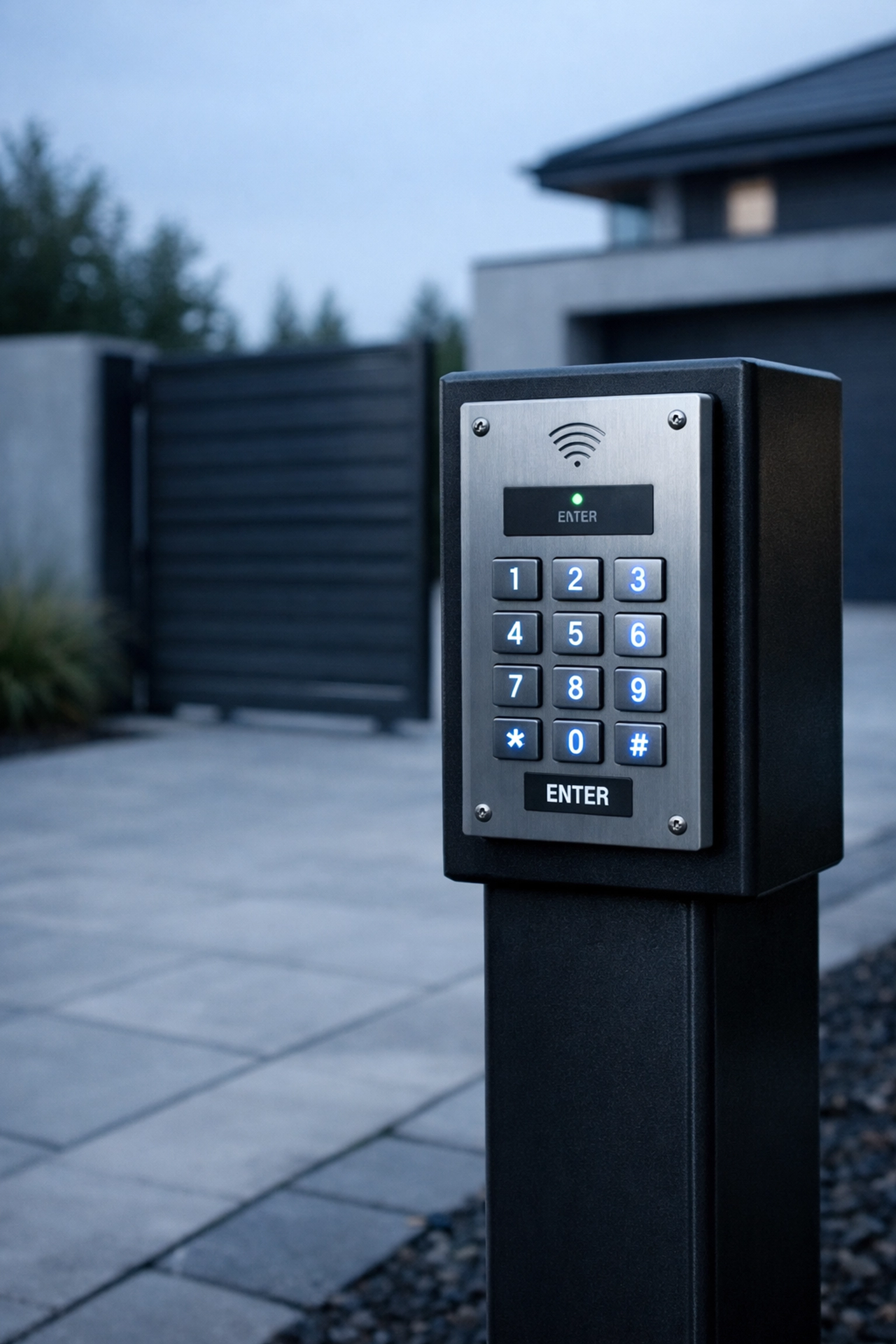
Wireless gate keypads rely on 9V or AAA battery internal power. Standard operation requires 95% or higher chemical capacity for full RF (Radio Frequency) propagation.
- SYMPTOM: Keypad operates within 2 feet but fails at 10 feet.
- TECHNICAL CAUSE: Voltage drop below 7.2V reduces the power of the oscillator circuit. The signal lacks the amplitude to penetrate environmental noise.
- CORRECTION: Replace with high-quality alkaline or lithium batteries.
02. METAL SHIELDING AND THE FARADAY EFFECT
Mounting a wireless keypad for gate access directly onto a steel or aluminum post creates signal absorption.
- SYMPTOM: Intermittent signal transmission.
- TECHNICAL CAUSE: Metal surfaces reflect RF waves back into the transmitter. This creates a "dead zone" immediately behind the device.
- CORRECTION: Use a non-metallic spacer (wood or plastic) between the keypad and the metal post. Ensure the antenna path is clear of structural steel.
03. FREQUENCY INTERFERENCE (300MHZ – 390MHZ)
Electronic noise from surrounding infrastructure disrupts the communication between the gate keypad wireless unit and the receiver.
- SOURCES:
- LED light bulbs
- Wireless routers (2.4GHz harmonics)
- Nearby power transformers
- Neighboring garage door openers
- FIX: Identify local interference sources. Swap to a Digi-Code system with a dedicated frequency to bypass standard OEM congestion.
04. COMPONENT CORROSION AND MOISTURE INGRESS
Outdoor exposure leads to oxidation on battery terminals and internal PCB (Printed Circuit Board) traces.
- SYMPTOM: Keypad buttons stick or signal fails during high humidity.
- TECHNICAL CAUSE: High resistance at contact points due to oxidation.
- FIX: Inspect seals. Use dielectric grease on battery terminals.
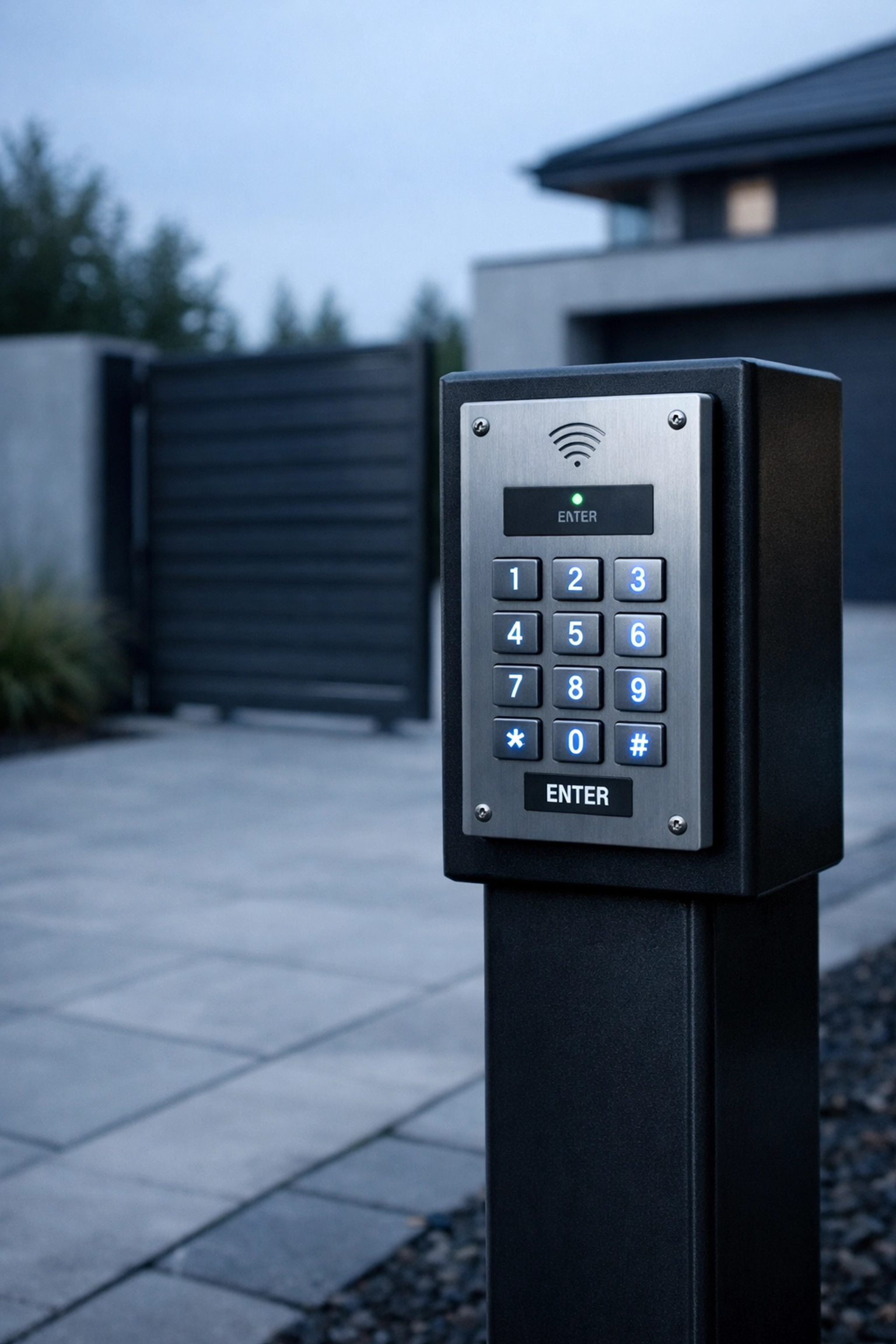
- PRODUCT SOLUTION: Digi-Code gate opener keypads are designed with weather-resistant housings for industrial and residential use.
05. ANTENNA POSITIONING ON RECEIVER
The receiver's antenna (typically a wire hanging from the gate operator) must be positioned for maximum exposure.
- CONFIGURATION RULES:
- Do not coil the antenna wire.
- Do not let the antenna touch metal housing.
- Point the antenna toward the keypad location.
- UPGRADE PATH: Where possible utilize Digi-Code DC-5166 300-390 MHz Antenna Extension Kit for enhanced reception range.
06. FREQUENCY DRIFT IN AGING WIRELESS KEYPADS
Older OEM keypads (Linear, Multi-Code, Stanley) experience frequency shift as capacitors age.
- TECHNICAL DATA: If the keypad shifts by even 1-2 MHz, the receiver will ignore the signal.
- SOLUTION: Replace aging units with Digi-Code compatible hardware.
- COMPATIBILITY LIST:
- Multi-Code (300 MHz) – Digi-Code DC-5200 Wireless Keypad
- Stanley (310 MHz) – Digi-Code DC-5202 Wireless Keypad
07. PHYSICAL OBSTRUCTIONS: DENSITY FACTORS
RF signals are attenuated by physical mass. Different materials cause varying levels of signal loss (dB).
| Material Type | Signal Loss Impact |
|---|---|
| Drywall/Wood | Low |
| Brick/Stone | Medium-High |
| Concrete (Reinforced) | High |
| Metal Siding | Total Blockage |
- CORRECTION: Reposition the wireless keypad for gate entry to a direct line-of-sight with the receiver.
08. DIP SWITCH MISMATCH AND SIGNAL NOISE
For Multi-Code or Stanley compatible systems, incorrect DIP switch positioning can lead to the assumption that the unit is no longer working, but for these types of keypads to work they must be programming with the same dip switch settings as the radio receiver.
- ISSUE: Using common codes (e.g., all switches UP or all switches DOWN) makes the system susceptible to phantom signals from other nearby devices.
- FIX: Use a unique, randomized 10-digit code. Ensure the keypad and the receiver settings match exactly.
09. INCORRECT MOUNTING HEIGHT
Mounting keypads too low (under 3 feet) or too high (above 6 feet) affects the signal arc.
- DATA: RF signals travel in an elliptical pattern. Ground-level mounting leads to signal absorption by the earth.
- RECOMMENDATION: Mount at 48 to 54 inches above grade.
10. OEM HARDWARE LIMITATIONS
Many factory-standard gate opener keypads are built with low-gain internal antennas to reduce manufacturing costs.
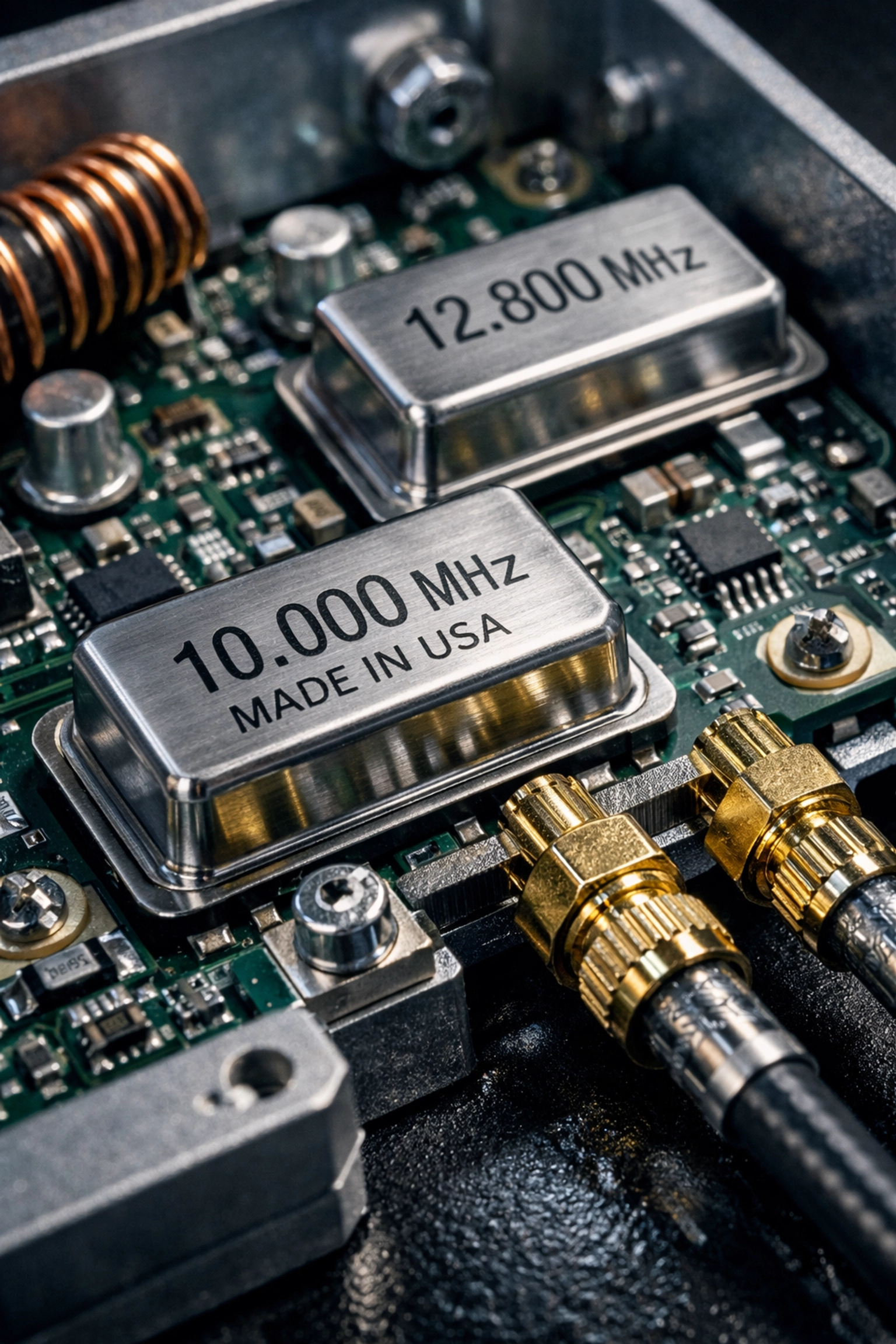
- COMPARISON: Digi-Code products are Made in the USA. We utilize higher-grade oscillators and tuned antennas to ensure a consistent range that outperforms generic replacements.
- ADVANTAGE: Cost-effective alternative to OEM parts with superior build quality.
DISTRIBUTOR INFORMATION: REPLACEMENT PARTS
For contractors and distributors, maintaining a stock of compatible keypads is essential for service calls.
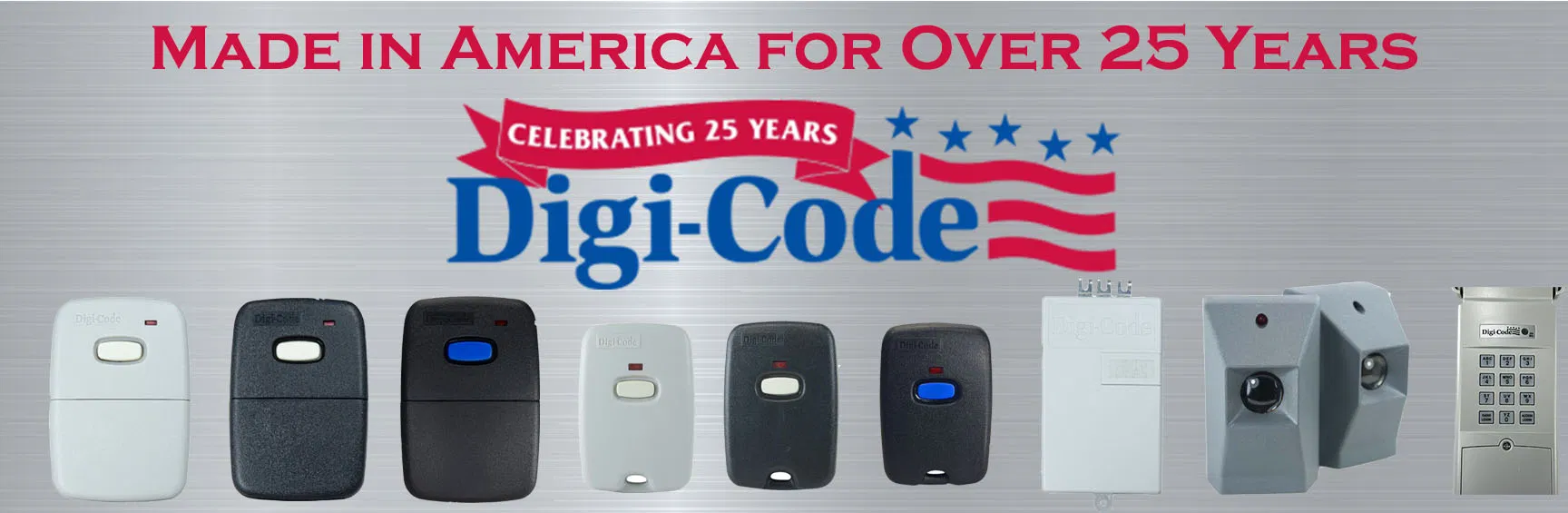
- PRODUCT: Digi-Code Wireless Keypads
- BRAND COMPATIBILITY: Multi-Code, Linear, Stanley.
- MANUFACTURING: All units produced in the United States.
TECHNICAL SPECIFICATIONS: DIGI-CODE WIRELESS SYSTEMS
- Frequency Range: 300 MHz and 310 MHz
- Power Source: 9-Volt Alkaline Battery.
- Operating Temp: -40°F to 140°F.
- Case Material: High-impact ABS plastic.
- Mounting: Surface mount with security screws.
TROUBLESHOOTING CHECKLIST
- Verify battery voltage is > 8.5V.
- Ensure no metal objects are between the keypad and receiver.
- Check for LED interference in the immediate area.
- Verify DIP switch settings match the receiver.
- Inspect for moisture inside the casing.
DATA LOG: PRODUCT COMPATIBILITY MATRIX
| Digi-Code Model | Replaces | Frequency |
|---|---|---|
| DC-5010 | Multi-Code 1090 | 300 MHz |
| DC-5042 | Multi-Code 4200 | 300 MHz |
| DT-1 | Delta-3 | 310 MHz |
| DT-2 | Delta-3 2-Button | 310 MHz |
SERVICE ANNOUNCEMENT
Digi-Code offers a full suite of access control solutions, including safety beam sensors and radio receivers. All products undergo rigorous testing at our USA facility to meet strict quality standards. For further technical documentation, visit the Product Sitemap.
RELATED LINKS
CONTACT DATA
NAME: Digi-Code
TYPE: Manufacturing
ORIGIN: USA
STATUS: ACTIVE
END OF LOG
2026-03-30 15:10:00 EST