
Wednesday, 18 of March 2026
Introduction to Photoelectric Safety Systems
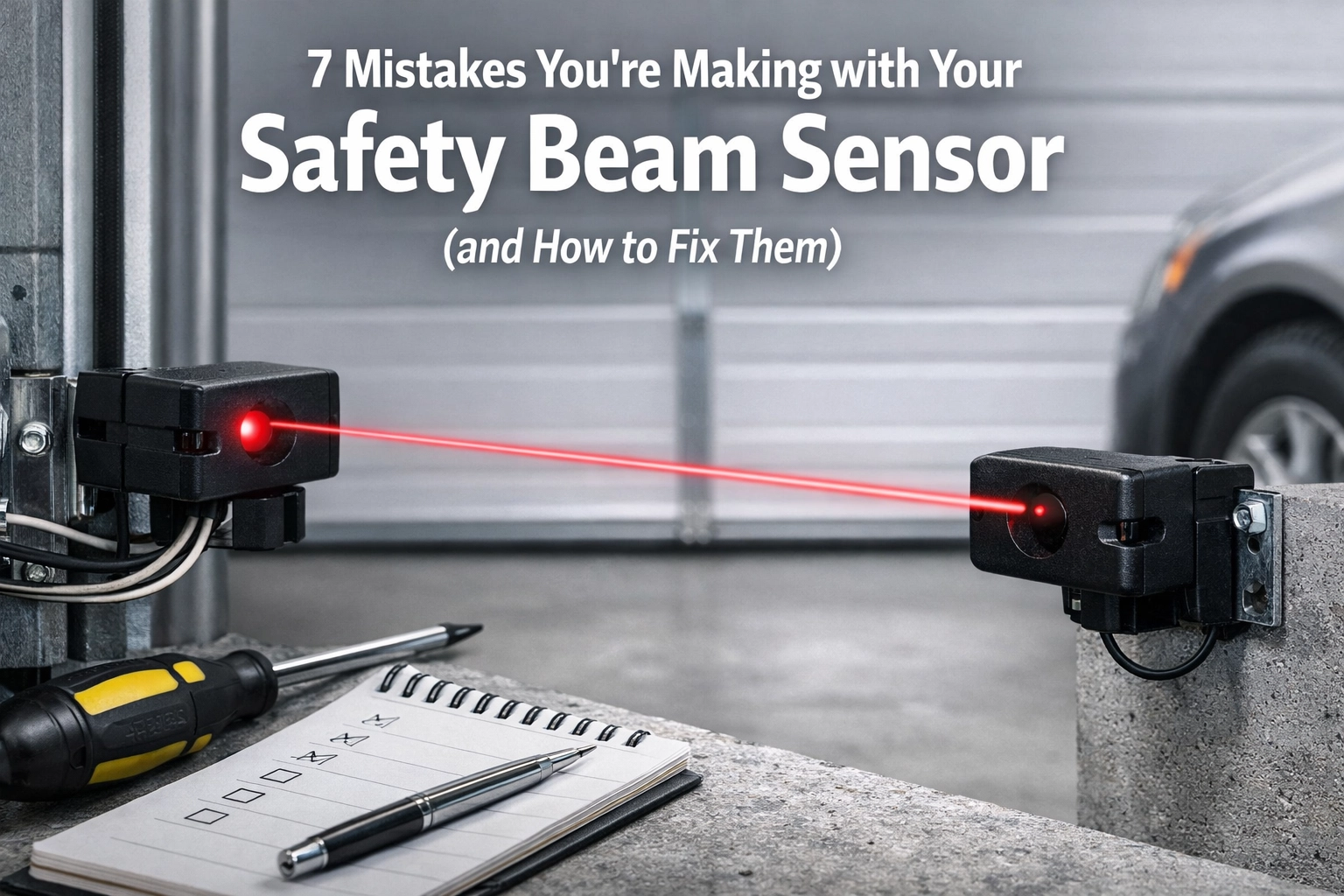
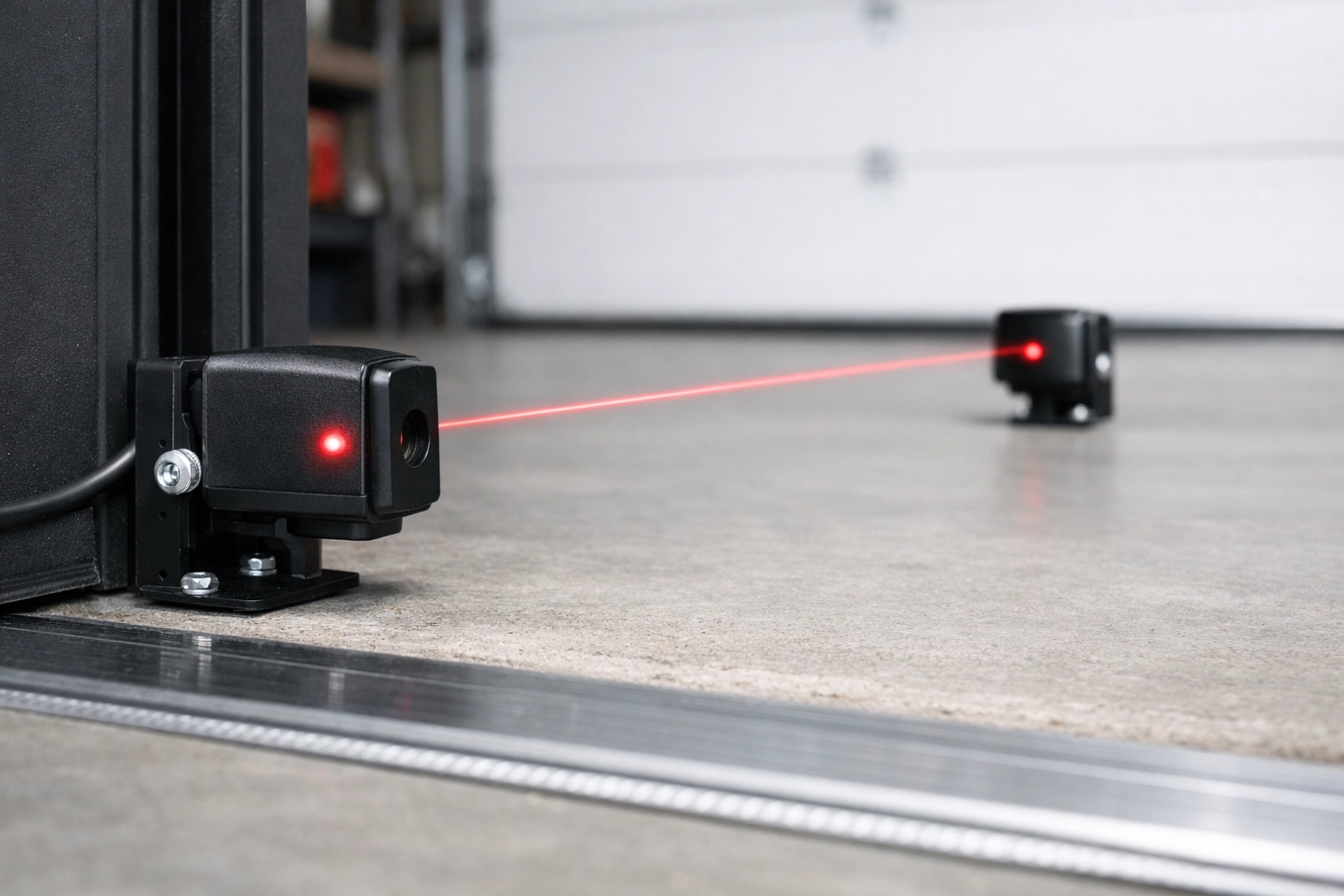
Safety beam sensors, often referred to as "photo eyes," are a critical safety component in modern garage door operator systems. Required by UL 325 standards, these devices prevent the door from closing on people, pets, or vehicles by projecting an invisible infrared beam across the opening. When this beam is interrupted, the motor reverses the door's direction.
While the concept is simple, the implementation and maintenance of a safety beam sensor can be prone to errors that lead to system downtime or safety hazards. For contractors and DIY enthusiasts, understanding the nuances of these universal garage door sensors is essential for ensuring long-term reliability and compliance.
1. Misalignment of the Infrared Optical Path
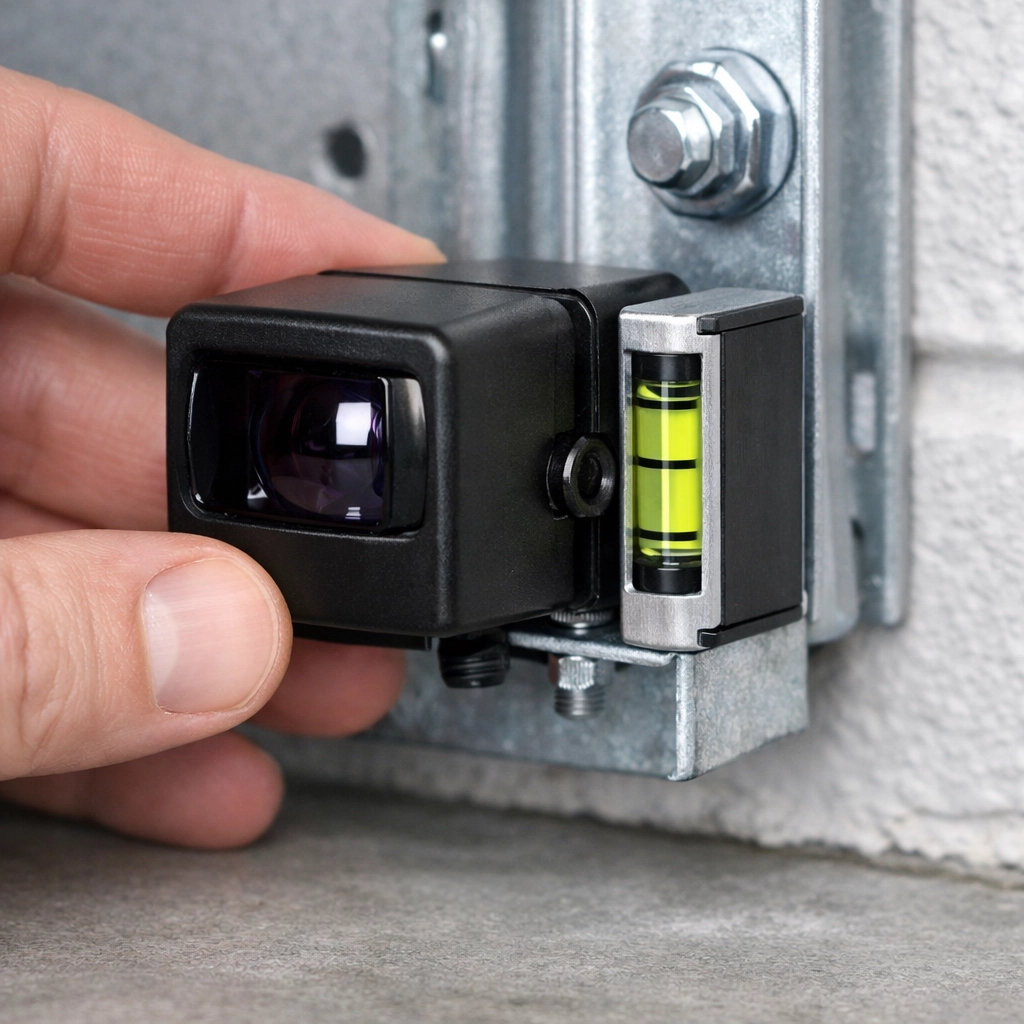
The most frequent cause of system failure is poor alignment between the transmitter (sending eye) and the receiver (receiving eye). Even a slight deviation in the angle can cause the receiver to lose the signal, triggering a "blocked" status.
The Problem:
Vibrations from the garage door track or door movement can gradually shift the mounting brackets. If the sensors are not perfectly parallel, the infrared light will bypass the receiver's lens.
The Fix:
- Visual Check: Ensure both sensors are mounted at the exact same height from the floor. Beams should be installed no more then 2-4 inches above the floor.
- Indicator Lights: Most high-quality sensors have an LED indicator. A solid light typically indicates a clear path, while a flickering or dark light suggests misalignment.
- Laser Alignment: For long garage-door openings, use a laser level to ensure the center point of each sensor is aligned.
2. Neglecting Environmental Accumulation on Lenses
In manufacturing environments or residential garages, dust, cobwebs, and moisture are constant factors. A universal garage door sensor depends on optical clarity.
The Problem:
Dust build-up acts as a physical filter, reducing the intensity of the infrared beam. In high-humidity areas, condensation can refract the light, causing the receiver to fail to recognize the signal from the transmitter.
The Fix:
- Routine Maintenance: Clean lenses monthly with a microfiber cloth and a mild, non-abrasive cleaner.
- Debris Removal: Ensure that the path between the sensors is free of spider webs or stored items.
- Weather Shielding: For garages exposed to wind-driven rain or heavy moisture (open carports, coastal areas, unconditioned buildings), ensure the housing is intact to prevent water ingress. For replacements in harsh environments, consider Digi-Code’s CR-2149 safety beam sensor (https://digi-code.com/product/cr-2149/) for a dependable, compatible option.
3. Improper Wiring and Connection Faults
Wiring issues often plague both new installations and older systems where the wire insulation has degraded.
The Problem:
Garage door sensors systems often use thin-gauge bell wire. These wires are susceptible to being pinched by staples, chewed by rodents, or frayed by moving parts. Loose connections at the motor head's terminal strip are also common.
The Fix:
- Visual Inspection: Trace the wire path from the sensor to the opener. Replace any sections showing signs of wear or exposed copper.
- Terminal Check: Ensure the "white" and "white/black" wires are securely fastened to the correct terminals.
- Compatibility Check: If you are using universal garage door sensors, ensure the wiring configuration matches the requirements of your specific operator brand, whether it be Linear, Chamberlain, Genie, or Stanley. If wiring damage has taken out the sensor electronics, replace the pair with a known-compatible set such as Digi-Code’s CR-2149 safety beam sensor.
4. Overlooking Interference from Direct Sunlight
Infrared sensors operate on a specific light frequency. However, intense ambient light: specifically direct sunlight during sunrise or sunset: can "blind" the receiver.
The Problem:
When the sun is low on the horizon, its infrared rays can overpower the signal from the transmitter. This results in a garage door that refuses to close during certain hours of the day, despite there being no physical obstruction.
The Fix:
- Sun Shields: Install a small cardboard or plastic hood around the receiving sensor to shade the lens.
- Swap Positions: In some cases, swapping the transmitter and receiver units (moving the receiver to the opposite side of the door) can move it out of the direct path of the sun.
5. Incorrect Mounting Height (Non-Compliance with UL 325)
Safety standards are not merely suggestions; they are engineered to protect the most vulnerable targets, such as small children or pets.
The Problem:
Mounting a safety beam sensor too high (e.g., 12 inches off the ground) creates a "dead zone" where a small child or a low-profile vehicle could be under the beam without breaking it. Conversely, mounting it too low can lead to frequent false triggers from leaves or small debris.
The Fix:
- Standard Height: Ensure sensors are mounted no higher than 6 inches from the floor.
- Stable Mounting: Use heavy-duty brackets that resist bending if bumped by a trash can or lawnmower.
6. Using Incompatible Aftermarket Sensors
Not all sensors are created equal. Many DIYers attempt to save money by purchasing cheap, imported "universal" sensors that lack the necessary circuitry to communicate with professional-grade operators.
The Problem:
Compatibility issues with brands like Linear, Chamberlain, Genie, and Stanley can lead to intermittent operation or a total refusal of the opener to learn the new sensor. Cheap imports often lack the durability required for American garage environments.
The Fix:
- Choose Proven Quality: Opt for sensors that are specifically engineered for compatibility. Digi-Code offers universal garage door sensors designed to work seamlessly with major brands—options include the CR-2149 (https://digi-code.com/product/cr-2149/) and the CR-2154 for a reliable, correct-fit replacement.
- Better than OEM: While OEM (Original Equipment Manufacturer) parts can be overpriced, Digi-Code provides a "better than OEM" solution: Made in the USA, more affordable, and built to higher durability standards.

7. Attempting to Bypass or Override Safety Features
When a sensor fails, the natural impulse is to bypass it to get the door closed.
The Problem:
Bypassing a safety device by holding down the wall button is a significant liability. It creates a high-risk environment for injury and can void insurance policies in the event of an accident.
The Fix:
- Diagnose, Don't Bypass: Use the troubleshooting steps above to identify the root cause.
- Replacement: If the sensor is electronically dead, replace it immediately. High-quality universal garage door sensors are an inexpensive investment compared to the cost of a preventable accident.
The Digi-Code Advantage
For contractors and homeowners looking for a reliable safety beam sensor solution, Digi-Code provides an industry-leading alternative to standard OEM parts.
Why choose Digi-Code for your safety sensors?
- Universal Compatibility: Our sensors are designed to integrate with major industry brands including Linear, Chamberlain, LiftMaster, Genie, and Stanley. You don’t need to stock five different types of sensors; one universal solution covers your needs.
- Made in the USA: We take pride in American manufacturing. Our products are built to withstand the rigors of both residential and commercial use, ensuring fewer callbacks for contractors and more peace of mind for homeowners.
- Superior Pricing: We eliminate the "brand tax" associated with OEM manufacturers. You get high-performance, domestic-made technology at a price point that makes sense for your budget.
- 25 Years of Expertise: With over two decades of experience in the access control industry, our products are engineered for longevity and ease of installation.
Technical Resources
For further technical specifications or to find the right part for your specific operator, visit our product categories:
Maintenance Checklist for Safety Sensors
| Component | Task | Frequency |
|---|---|---|
| Lenses | Wipe clean with a soft cloth | Monthly |
| Brackets | Tighten mounting screws | Every 6 Months |
| Wiring | Check for frays or rodent damage | Annually |
| Alignment | Verify solid LED indicator status | Monthly |
| Testing | Place object in path to ensure reversal | Monthly |
By avoiding these seven common mistakes and utilizing high-quality, American-made universal garage door sensors, you can ensure that your access control system remains safe, reliable, and compliant for years to come. Whether you are a professional contractor or a dedicated DIYer, the right equipment makes all the difference.